
Understand your product with Value Chains
Untangle technical complexity and get more specific on where to invest

To deliver anything to your end customer, you have a collection of systems, services, capabilities, providers, etc. Let's call them components. Together, they form a value chain through their dependencies on each other. When somebody visits a website, it needs a domain, a host, space, maybe a database, etc. These need compute, which requires power. I know I simplify here, but I'm not trying to get into tech details now.
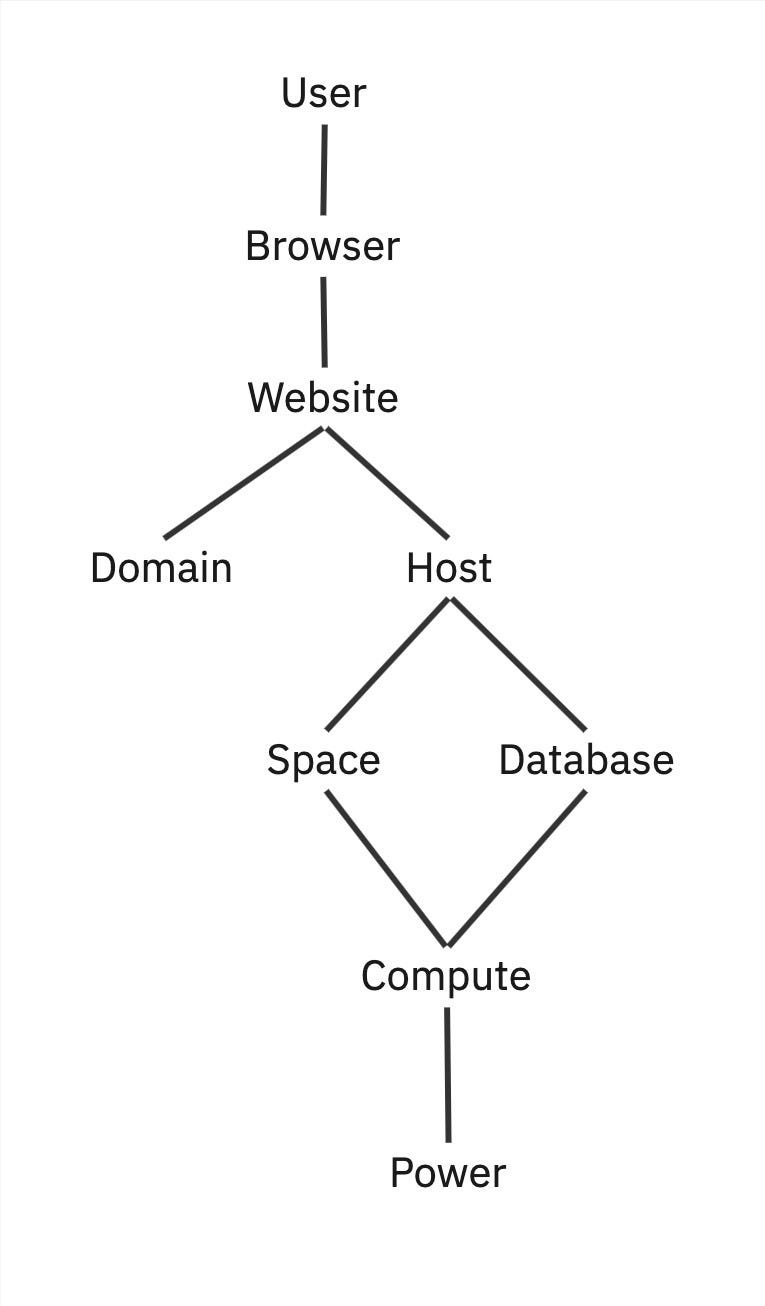
Understanding your value chain enables you to decompose how your product works. And as we know, an excellent way to understand a system is to visualize it.
Let's bring look at a concrete example of a simple Todo list web service.
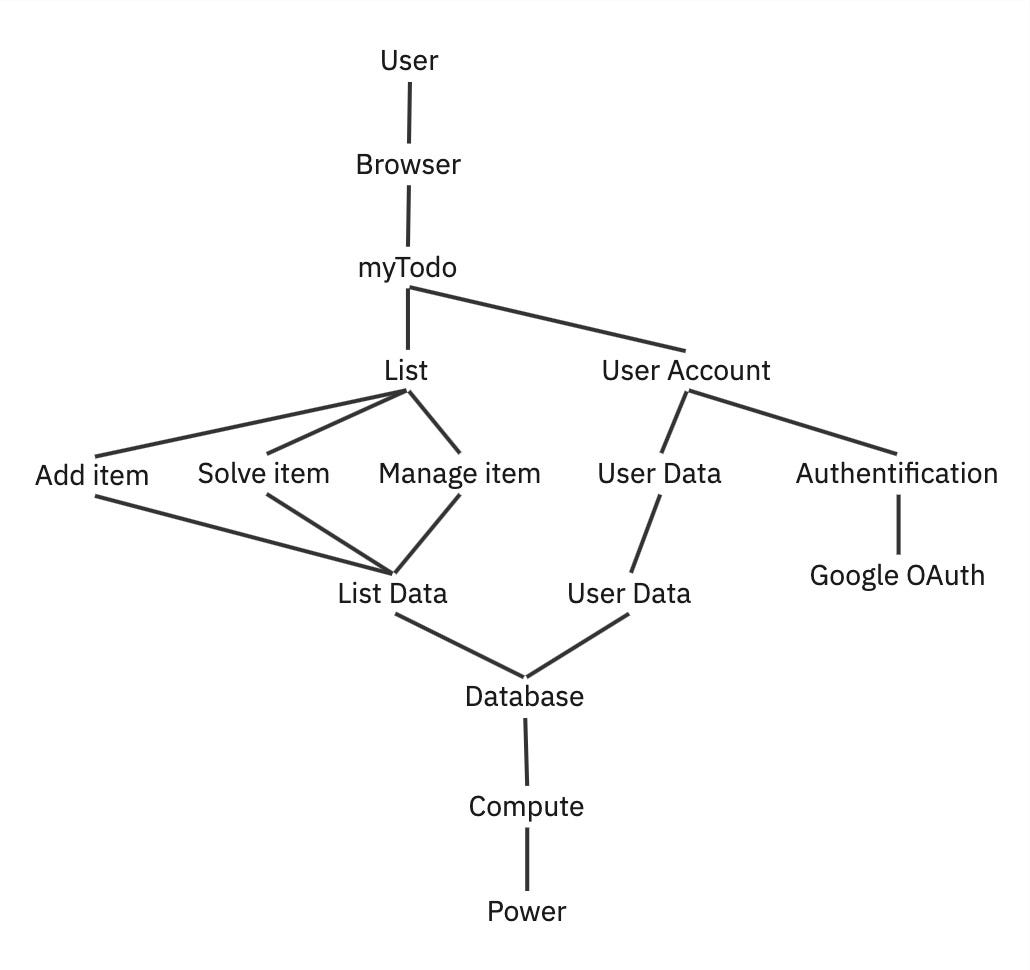
This example shows that our service is centered around the list and user account. We have a custom solution for the list and user data but utilize Google for authentication.
As always, our diagram is a simplification, but that’s ok. Include the detail which is relevant to your situation. Looking at this, you could start to discuss where it would make sense to create new value or save costs. Maybe you want to add another channel on the browser level, like a desktop client via an Electron app, as many popular web apps do. Or you don't need to manage the user data and utilize a 3rd party service.
Value Chains help you get an overview of how you deliver your service. Visualizing the value chain allows you to recognize where you spend your energy. Are you building everything from scratch? Do you build systems that are not core to your product? Do you have multiple systems that are doing the same thing? You might be surprised how often this simple diagram is a revelation for a group of people.
Creating this visualization and discussing it should help you understand where your product's core is and if you concentrate your effort on it.